
New Brunswick Events
Moonlight Bazaar Saint John: Complete Visitor Guide
Planning to experience Moonlight Bazaar in Saint John, New Brunswick? Discover what it’s like, what to expect, where it happens, what to eat and our tips for enjoying this unforgettable Uptown street festival.
Last updated: August 2026 · Discover Atlantic Canada Editorial Team
There are evenings when Uptown Saint John feels completely different.
Moonlight Bazaar is one of them.
As daylight fades, the historic streets begin filling with people. Strings of lights glow between the buildings. Food vendors start serving. Music carries through the surrounding blocks.
And then you see it.
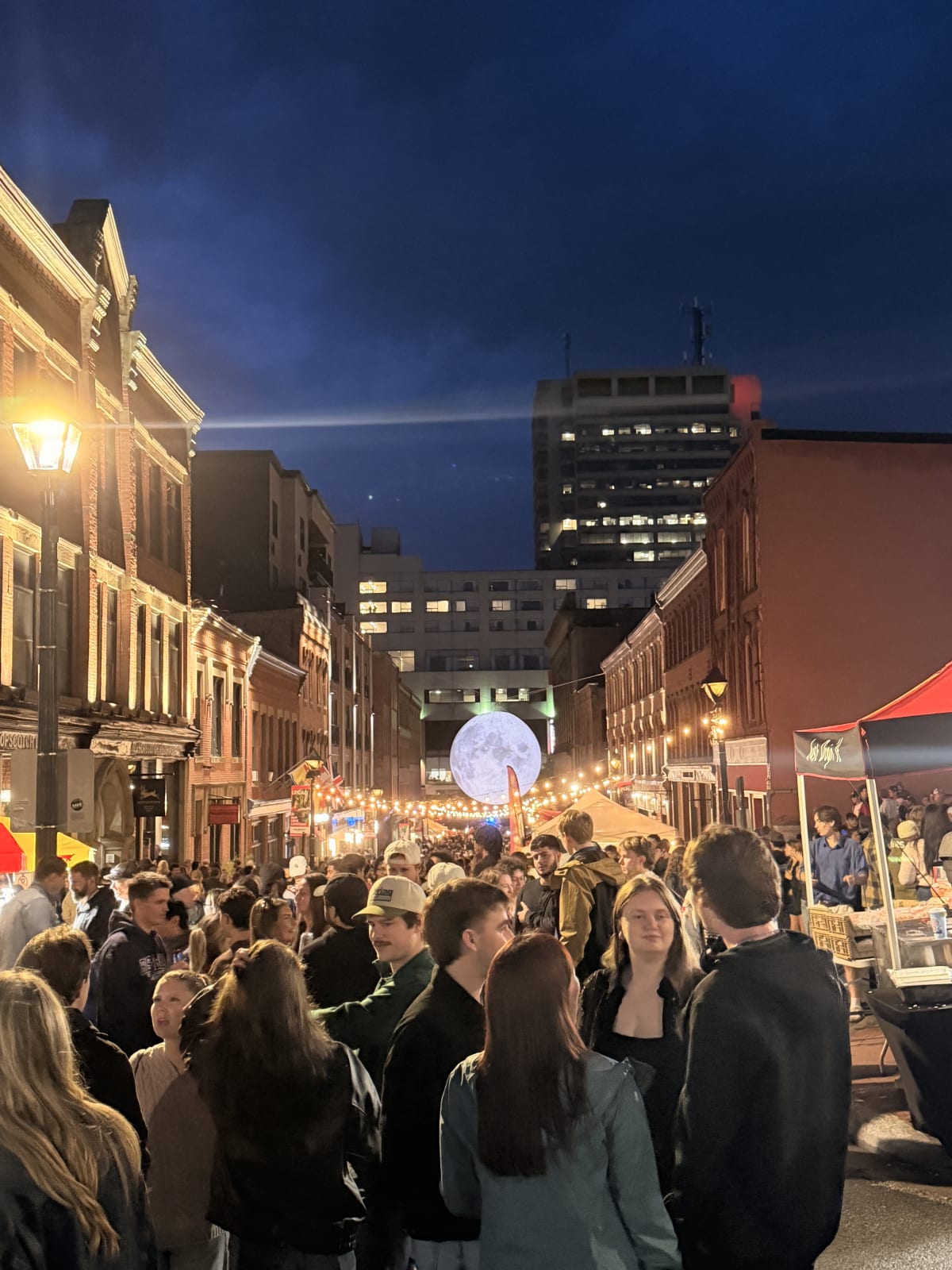
A gigantic illuminated moon suspended above the street.
For one night, the brick-lined streets of Uptown Saint John become an enormous open-air celebration of food, music, art and community.
Moonlight Bazaar is a free annual street festival held in the heart of Saint John, New Brunswick. Its signature attraction is an enormous seven-metre inflatable moon, suspended above the streets of Uptown.
But the moon is only part of the experience.
The festival combines local vendors, food, artists, live music and performances, with entertainment appearing throughout the festival area rather than everything happening on a single conventional stage. The organizers describe previous entertainment as ranging from live music and fire dancers to skateboard tricks and rooftop performances.
Discover Atlantic Canada Field Note
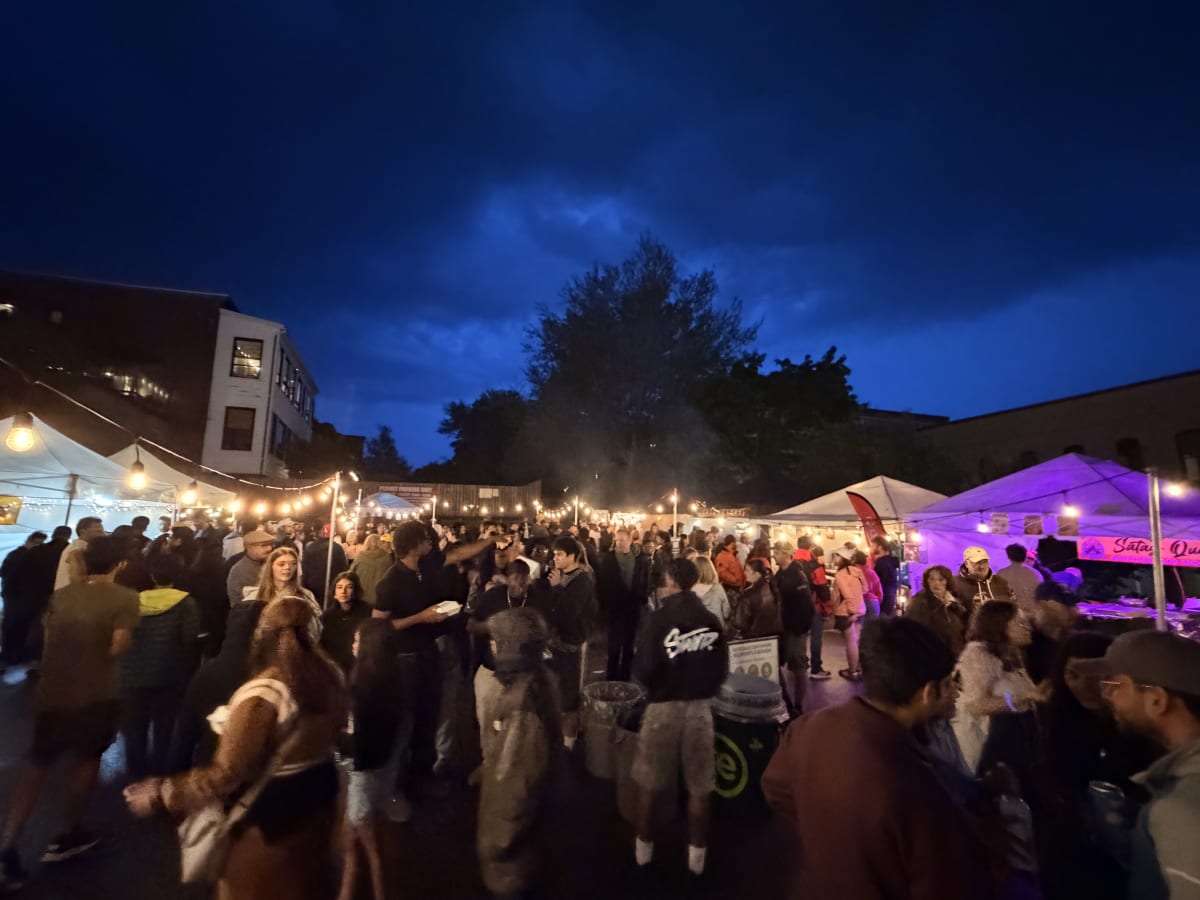
We visited Moonlight Bazaar ourselves, and the first thing that surprised us wasn’t simply the giant moon — it was the scale of the crowd. As darkness settled over Uptown Saint John, entire streets were filled with people moving between food stalls, performances and vendors. If you’re hoping for a quiet evening stroll, this isn’t it. Come for the energy.
What Is Moonlight Bazaar?
Moonlight Bazaar is an outdoor art, culture, food and music festival held in Uptown Saint John.
The event began as a celebration built around the atmosphere of a nighttime bazaar and has grown into one of Saint John’s distinctive summer events.
The streets themselves become the festival grounds.
Instead of entering a fenced festival site, visitors wander through several blocks of Uptown Saint John surrounded by historic architecture, restaurants, vendors, performers and thousands of other festival-goers.
The giant illuminated moon hanging between the buildings has become the event’s defining visual.
Tourism New Brunswick describes the event as a mixture of music, food, art and creative performances, including unusual entertainment such as fire performances, fortune telling, dancing and theatrical performances.
And it’s free to attend.
The Giant Moon
You can see photographs of Moonlight Bazaar online.
But they don’t quite prepare you for walking underneath the moon.
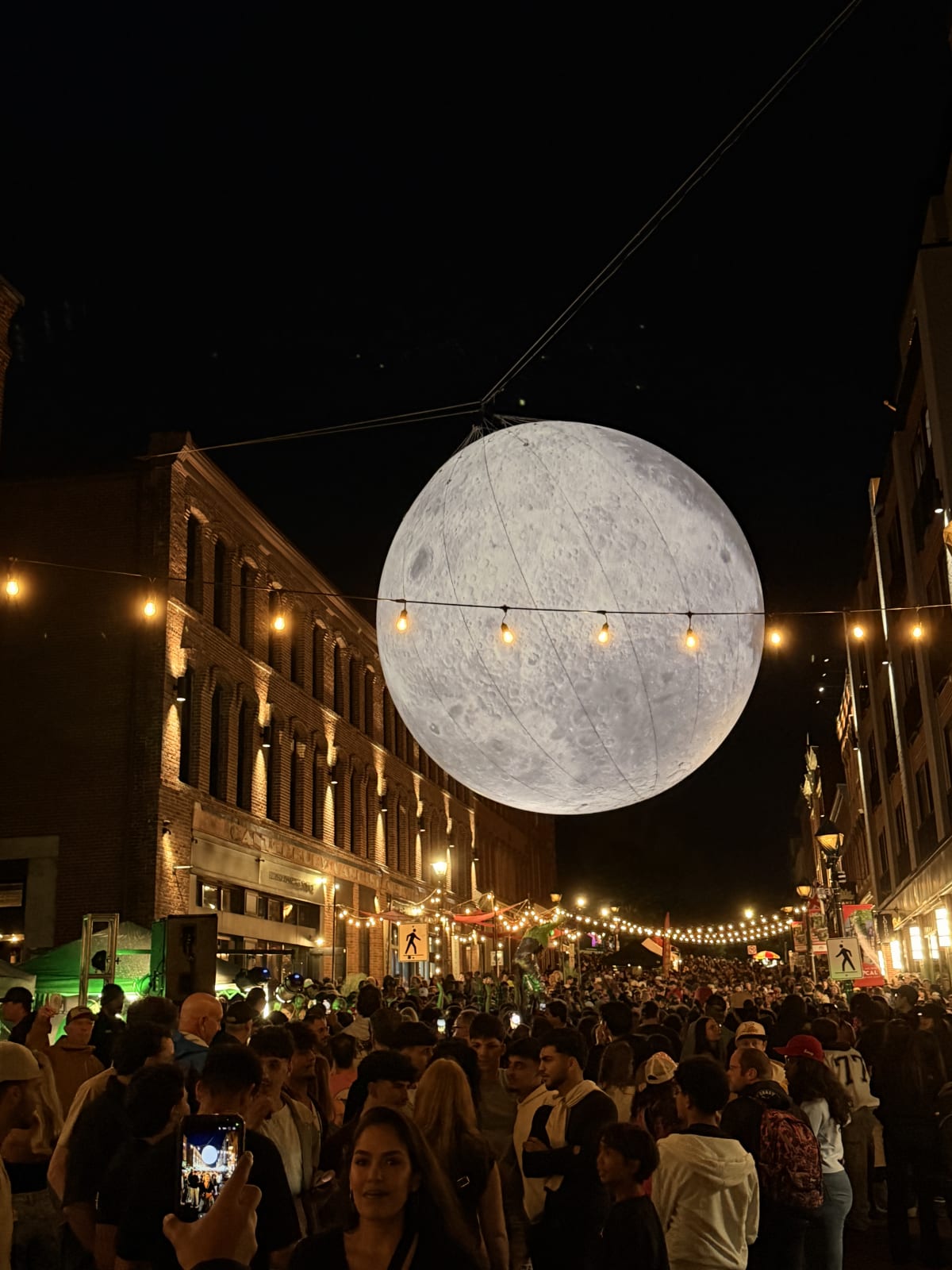
Suspended between the buildings above the street, the enormous illuminated installation feels even larger when you’re standing directly beneath it.
The moon measures approximately seven metres across and hangs several metres above the street.
Against Saint John’s historic brick buildings and the dark night sky, it creates one of the most recognizable festival scenes in Atlantic Canada.
Our photo tip
Don’t take all your photographs directly underneath the moon. Some of the best compositions come from walking farther uphill and photographing the moon down the street with the crowd and historic buildings in the foreground. Your second photo demonstrates exactly why.
What the Festival Actually Feels Like
Moonlight Bazaar isn’t an event where you need a detailed itinerary.
It’s better explored by wandering.
Walk down one street and you might encounter music.
Turn a corner and you’ll find vendors.
Continue another block and there may be a performance surrounded by a crowd.
Food smells drift through the streets while music comes from different directions.
The historic buildings surrounding the festival make the atmosphere particularly interesting. During the daytime, this is recognizably Uptown Saint John.
At night, under festival lights and an enormous glowing moon, it feels very different.
Food & Local Vendors
Food is an important part of the Bazaar.
Rather than treating dinner as something you need to finish before arriving, consider making the food vendors part of your evening.
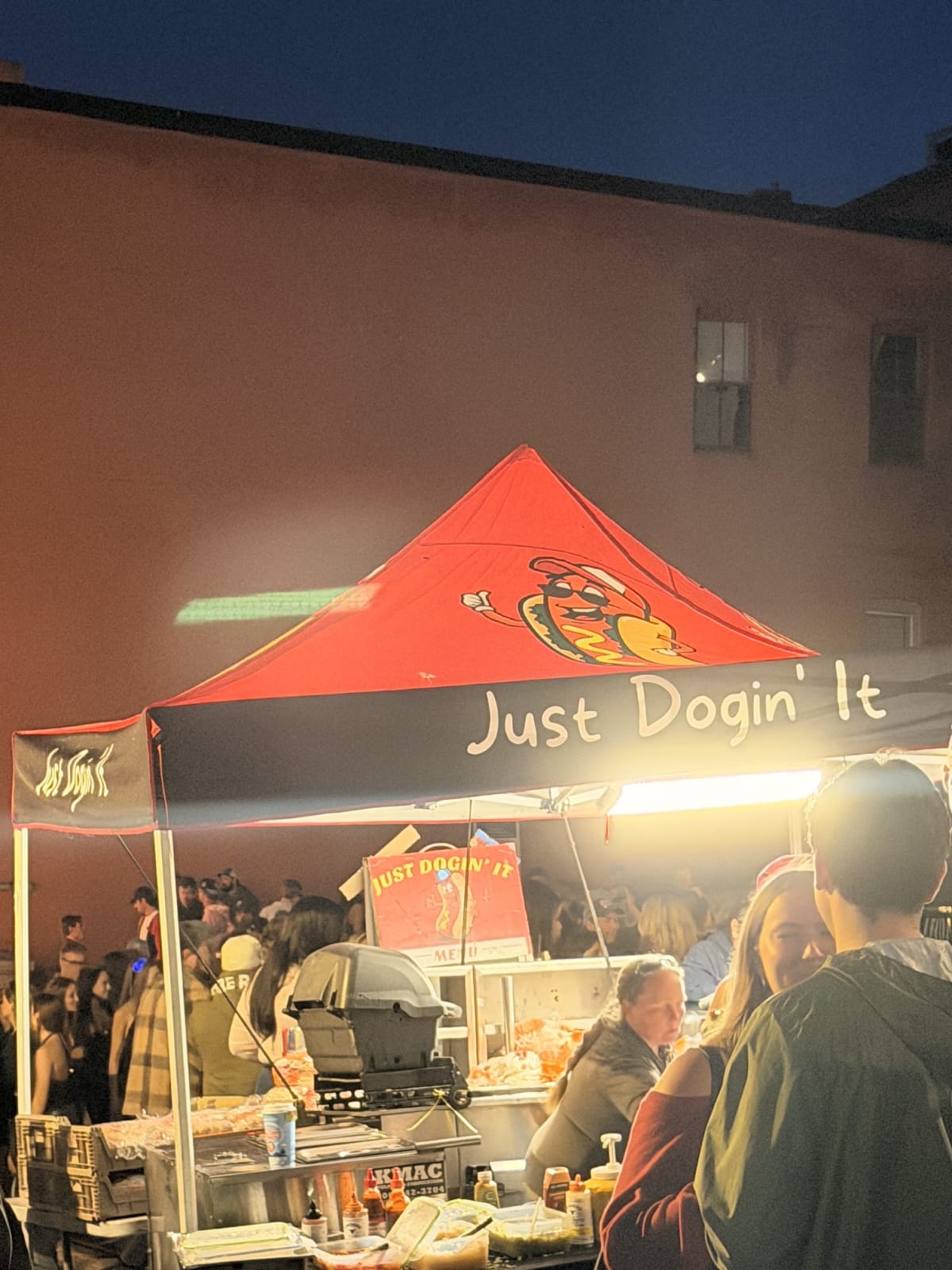
The festival brings together various food options alongside local vendors and artists. The organizers specifically list food, art and vendors among the core parts of the experience.
Our approach would be simple:
Arrive hungry.
Walk through the festival first, see what’s available, and then decide what you want to try.
This is also a good opportunity to support independent vendors and local makers.
Music & Unexpected Performances
One of the most interesting things about Moonlight Bazaar is that you don’t always know what you’ll encounter next.
The organizers intentionally incorporate pop-up entertainment throughout the event.
Live music is part of the experience, but previous Bazaar programming has also included fire dancers, skateboard demonstrations and other spontaneous performances.
That unpredictability is part of the appeal.
Rather than racing between scheduled attractions, give yourself time to wander.
Where Is Moonlight Bazaar?
Moonlight Bazaar takes place in Uptown Saint John, New Brunswick, centred around the historic streets near Canterbury Street and Prince William Street.
For the 2026 event, the festival footprint involved Canterbury Street, Prince William Street, Grannan Lane and Princess Street, with sections closed to vehicle traffic.
That puts visitors within walking distance of many of Saint John’s restaurants, shops and waterfront attractions.
Important: The exact festival footprint and street closures can change, so check the official event information before travelling: Official Moonlight Bazaar website
When Is Moonlight Bazaar?
Next Moonlight Bazaar:
* Location: Uptown Saint John, New Brunswick
* Admission: Free
* Season: Summer
* 2026 event: July 18, 2026
* Official information: Moonlight Bazaar
Moonlight Bazaar is a summer event.
The 2026 Saint John edition was held Saturday, July 18, 2026.
Always confirm the upcoming event date with the organizers before planning your trip.
Best Time to Arrive
This is where your first-hand content can become much more useful than tourism listings.
I’d recommend arriving before darkness.
There are two advantages.
First, you can explore the vendors and understand the festival layout before the biggest nighttime crowds arrive.
Second, you get to watch the atmosphere change.
The blue evening sky gradually disappears, the string lights become brighter, and eventually the illuminated moon dominates the street.
For photographers, this transition from dusk to darkness is particularly good.
Your first photo captures that blue-hour atmosphere beautifully.
Expect Crowds
Moonlight Bazaar can get very busy.
The narrow streets, vendors and performances create bottlenecks, particularly around the moon and major entertainment areas.
If you’re visiting with young children, establish a meeting point and keep them close once the evening crowd builds.
If you prefer more space, arrive earlier rather than coming only for the peak nighttime atmosphere.
Getting There & Parking
Don’t plan on driving directly into the festival area.
Road closures are used to turn sections of Uptown into pedestrian festival streets. For the 2026 event, portions of Canterbury Street, Prince William Street, Grannan Lane and Princess Street were closed for the event. Accessible parking areas were also designated by the city.
A better strategy is to park outside the immediate festival footprint and walk into Uptown.
Check the City of Saint John and official Moonlight Bazaar information shortly before attending because traffic arrangements can change annually.
Is Moonlight Bazaar Good for Families?
Yes, but timing matters.
Families wanting a calmer experience should consider arriving earlier.
Previous editions have included dedicated children’s programming; for example, the City of Saint John’s 2025 listing advertised a Kids Hour from 4–6 p.m.
However, don’t assume that programming or timing will repeat every year.
Later in the evening, the atmosphere becomes much busier and feels more like a large nighttime street festival.
How Long Should You Spend Here?
Allow roughly 2–4 hours if you want to explore rather than simply photograph the moon and leave.
That gives you time to walk through the streets, browse vendors, eat something, watch performances and experience the festival after dark.
You can easily make it part of a full day exploring Saint John.
Make It a Saint John Weekend
Don’t treat Moonlight Bazaar as an isolated event. Someone travelling to Saint John specifically for the Bazaar could spend the rest of their weekend exploring the city and Bay of Fundy coast.
Consider connecting your trip to:
Things to Do in Saint John → Saint John City Market → Reversing Falls → Irving Nature Park → Fundy Trail Parkway → St. Martins Sea Caves.
This creates a natural route from a highly searchable event into your destination and road-trip guides.
Is Moonlight Bazaar Worth Visiting?
Yes — particularly if you’re already travelling through southern New Brunswick during the summer.
The giant moon may be what gets people to take out their phones, but the more memorable part is seeing Uptown Saint John become a pedestrian festival for the evening.
Historic brick buildings, thousands of people, street food, music, artists and unexpected performances create an atmosphere that is very different from visiting the city on an ordinary evening.
And because admission is free, it’s easy to incorporate into a Saint John weekend.
Our Tips Before You Go
- Arrive before sunset. You’ll see both the daytime festival and nighttime atmosphere.
- Expect substantial crowds later in the evening.
- Wear comfortable shoes. You’ll spend much of the evening walking and standing.
- Come hungry and try the festival food.
- Walk beyond the moon. Some of the most interesting vendors and performances may be elsewhere in the festival area.
- Photograph the moon from a distance first. Once you’re directly underneath it, capturing its scale becomes harder.
- Check road closures before driving Uptown.
- Verify the current year’s schedule rather than relying on previous festival times.
Discover Atlantic Canada Field Notes
* Visited: July 2026
* Experience: Moonlight Bazaar
* Location: Uptown Saint John, New Brunswick
* Best for: Couples, friends, families, photographers, festival lovers
* Cost: Free admission
* Best time: Late afternoon through evening
* Crowd level: Very high after dark
* Time needed: 2–4 hours
* Would we return? Yes
This guide is based on our visit to Moonlight Bazaar combined with current information from the event organizers and official tourism sources. Event programming, street closures and dates can change each year.
Frequently Asked Questions
Is Moonlight Bazaar free?
Yes. The Saint John Moonlight Bazaar is free to attend.
Where is Moonlight Bazaar in Saint John?
The festival takes place in Uptown Saint John, primarily around Canterbury Street, Prince William Street and surrounding streets.
What is the giant moon at Moonlight Bazaar?
It is an enormous illuminated inflatable moon approximately seven metres in diameter and is one of the signature installations of the festival.
Is Moonlight Bazaar family-friendly?
Families can attend, and previous editions have included children’s programming. Earlier arrival is likely more comfortable for families with small children because crowds become considerably denser later in the evening.
What happens at Moonlight Bazaar?
Expect a combination of food vendors, artists, local vendors, live music and creative pop-up performances spread throughout Uptown Saint John.